
Rolex Prince ref. 1541
Reference:1541
Prince → 1541

The Prince ref. 1541 is a rectangular manual-wind watch with the family’s hours-and-minutes dial above subsidiary seconds. Catalogues describe both sharply edged Classic cases and flared Brancard cases, in 9K and 18K gold, stainless steel, and steel with pink-gold sides. The earliest catalogue estimate found is 1928; the latest Glasgow mark is dated 1937. Those dates belong to individual watches and leave the production limits unknown.
Core facts
| Detail | Documented record |
|---|---|
| Family | Prince |
| Reference | 1541 |
| Case | Rectangular; Classic and Brancard labels appear on individual examples |
| Materials | 9K and 18K gold; stainless steel; steel with pink-gold sides |
| Dial | Duo-dial with subsidiary seconds; silvered, two-tone and mirror-finish examples are catalogued |
| Movement | Manual, with 15-, 17- and 18-jewel examples; caliber labels vary and one Cal. 310 attribution conflicts with the pictured dial |
| Strap or bracelet | Leather straps in several records; one 1994 catalogue lists an integrated 18K bracelet |
| Production span | Unknown; surviving records include a 1928 catalogue estimate and Glasgow marks through 1937 |
Where it sits in the line
Ref. 1541 is part of the Prince family introduced in 1928. Tim Mosso's Quill & Pad history and Jack Forster's Hodinkee account date the first models to that year; Forster identifies refs. 971 and 1343 among the early forms. The surviving records place ref. 1541 examples into 1937, but do not establish production boundaries. Tim Mosso, “The Golden Age of Rolex Movements,” Quill & Pad, 2019 Jack Forster, “Hands-On Cellini Rolex Prince,” Hodinkee, 2015
The sale records use both “Classic” and “Brancard.” Phillips calls case 39,626 a Classic; Christie’s and Bonhams use Brancard for flared examples. These labels describe individual watches; a full design sequence has not surfaced. Phillips, case 39,626 Christie’s, case 037742 Bonhams 2016, case 192**
Production outline
Catalogued examples place ref. 1541 from a 1928 estimate through Glasgow marks dated 1937. Phillips and Christie’s give different estimates for case 39,626: Phillips cites its 1937 Glasgow mark and a certificate dated 4 March 1938, while Christie’s later dates the same case to circa 1945. These individual records do not set production endpoints. The auction record below keeps each date with its source and case. Phillips, case 39,626 Christie’s, case 39,626
Movement notes
Colin A. White's The Vintage Rolex Field Manual lists ref. 1541 as a full-size yellow-gold Prince Chronometer with a 7½-line movement, rectangular case and subsidiary seconds. The table gives no case number or production dates. Catalogue descriptions report 15 jewels on several watches, 17 on Antiquorum case 7080, and 18 on some examples dated around 1935–37. Antiquorum calls movements on several lots 7-line or 7½-line Extra Prima; other catalogues use Observatory or chronometer descriptions. An archived dealer listing assigns Cal. 1240 to an 18-jewel 1541 with a Glasgow 1937 mark, but gives no case number to match it to a separately documented watch. Artcurial’s photograph of case 39,658 shows “18 Rubies” and “Officially Tested in Eight Ways.” The available records document these details by lot, without a reference-wide grade or changeover sequence. Colin A. White, The Vintage Rolex Field Manual, Morning Tundra, 2020, PDF p. 42 (printed p. 64) Antiquorum, steel example Antiquorum, case 7080 Olde Timers, archived 1541 listing Artcurial, case 39,658
Antiquorum lists Cal. 310 for case 74532, whose photograph shows small seconds at six. Christie’s describes the Prince Cal. 310 as the centre-seconds movement, distinct from Cal. 300 with small seconds. The photographed dial and Christie’s description leave Antiquorum’s Cal. 310 attribution unresolved. Antiquorum, case 74532 Christie’s, Prince movement essay

Dial map
The common layout has a large upper register for hours and minutes, with subsidiary seconds below. Christie's 1933 example has Arabic numerals and baton markers on a matte silvered dial. Antiquorum case 7080 is described with a two-tone silver-and-gold dial. Monaco Legend calls the dial on case 016134 a pink mirror finish. Artcurial describes a silvered two-tone dial with Arabic numerals, a railway minute track and baton markers. These records document several dial variants; the full range is unknown. Christie’s, case 10169 Antiquorum, case 7080 Monaco Legend, case 016134 Artcurial, case 39,658

Case, bezel, crystal, and crown
The case descriptions range from the sharply angled Classic case in the Phillips record to flared Brancard sides in Christie’s cases 037742 and Bonhams’ 1935 example. The named materials include 9K and 18K yellow gold, steel, and steel with pink-gold sides. Artcurial’s caseback photograph shows case 39,658 stamped “39658 / 1541,” the clearest direct reference-number evidence in this group. Phillips Christie’s Bonhams 2016 Artcurial
Catalogue dimensions include 20 × 35 mm, 20 × 40 mm and 42 × 26 mm. The cases differ in shape, and catalogues may measure them differently, so each figure applies to its lot. Several descriptions mention snap backs; cases 10169 and 39,658 have fixed strap bars. A Chrono24 listing’s structured fields identify ref. 1541, while its translated description calls the watch ref. 1490 and says its crown is a replacement. That conflict leaves the listing’s crown claim and any crystal specification unresolved. Christie’s Christie’s Artcurial Chrono24 dealer listing
-
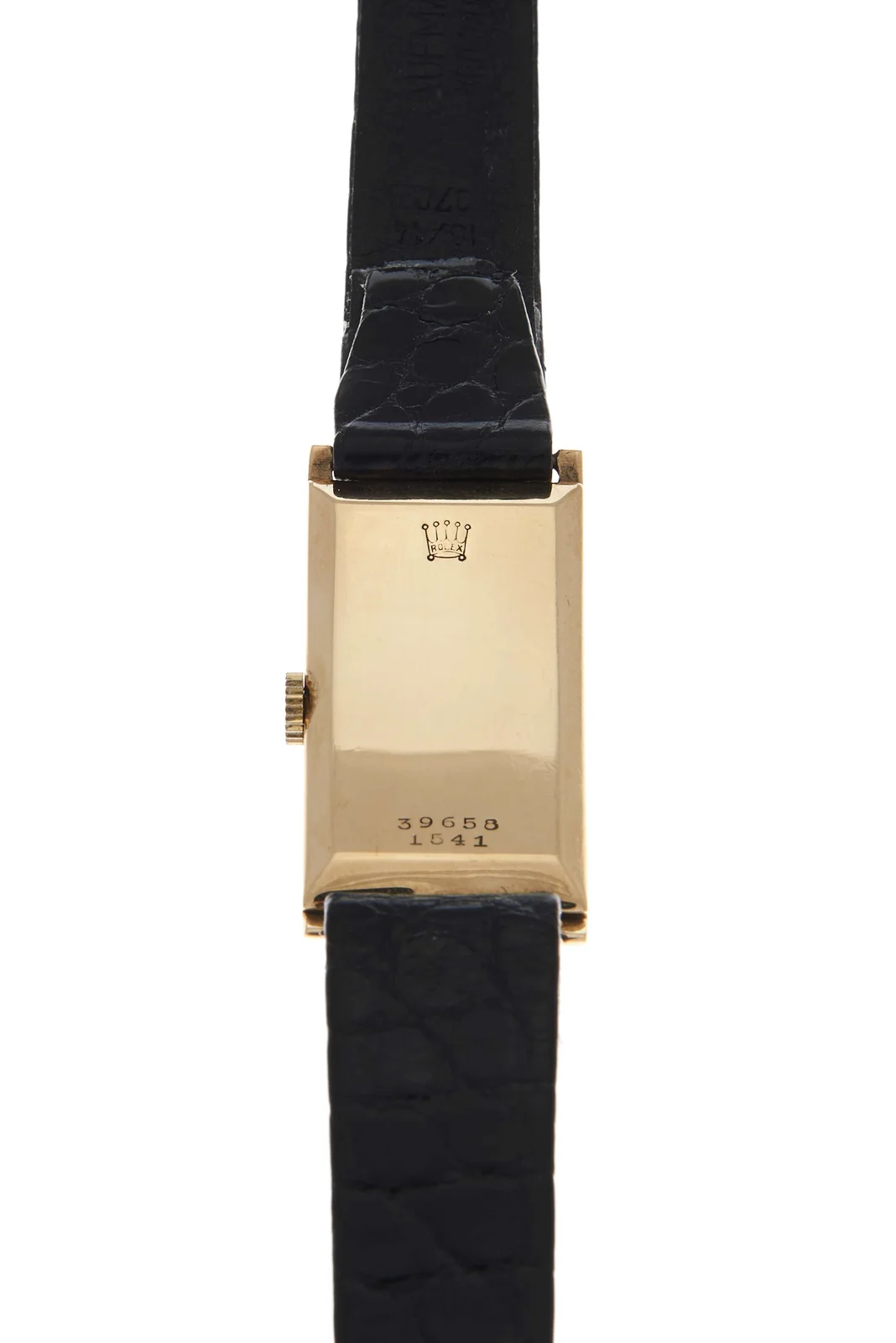 Outside caseback stamped 39658 over 1541; Artcurial, lot 141 (2018)
-
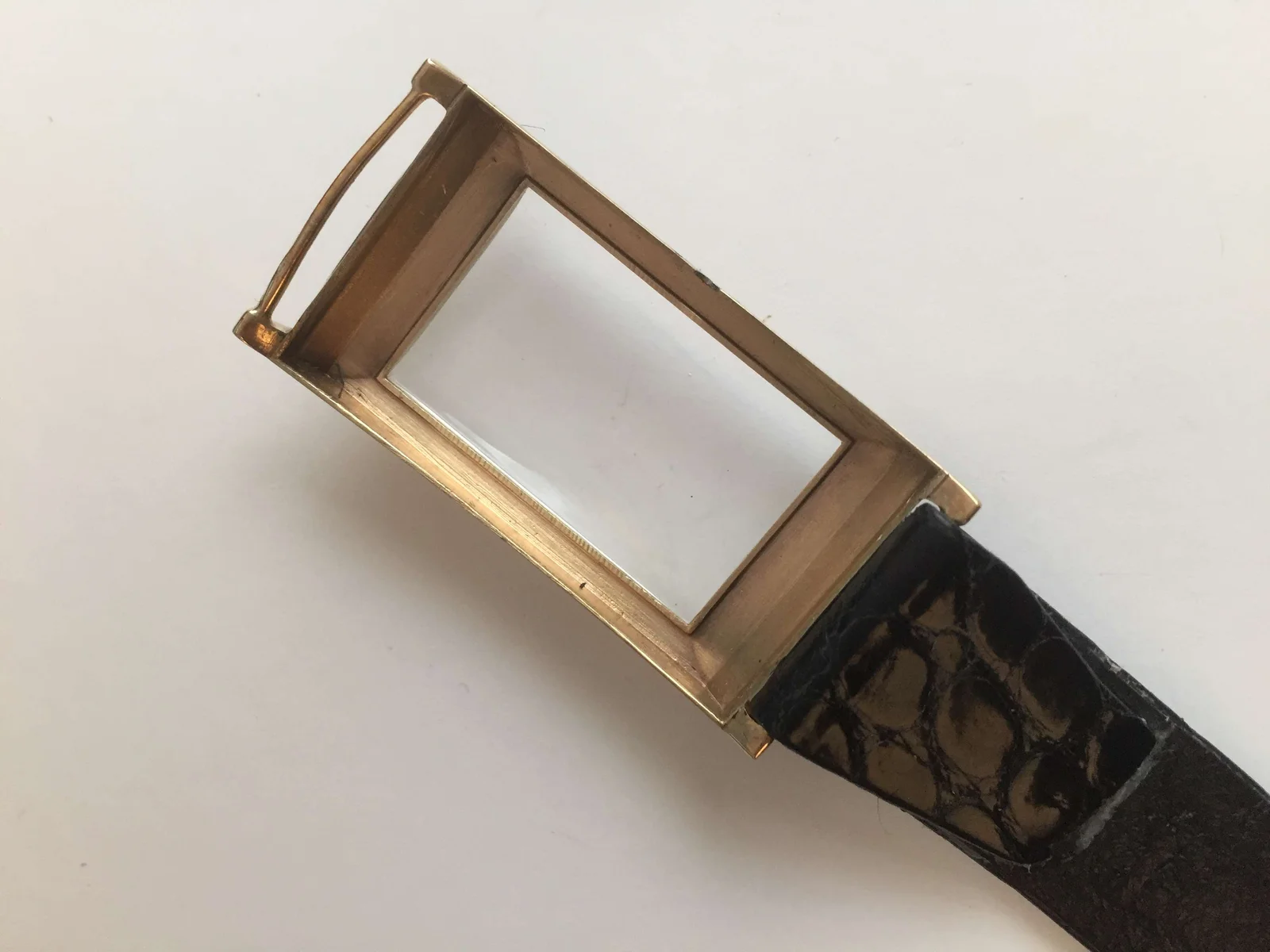 Side and fixed-bar construction of case 39658; Artcurial, lot 141 (2018)


Bracelets, clasps, and packaging
Most records describe leather straps. Antiquorum’s 1994 catalogue pairs one 18K Prince Classic ref. 1541 with an integrated gold bracelet. The catalogue documents one pairing; whether the bracelet left Rolex with the watch remains unknown. Antiquorum, lot 99
Phillips lists a fitted presentation box and a Rolex Technical Laboratories certificate dated 1938 with case 39,626. Bonhams lists a Rolex Prince box, certificate and swing tag for case 10183. Artcurial describes a period presentation case with case 39,658. These items were offered with the watches; their original delivery with each watch is unverified. Phillips Bonhams, case 10183 Artcurial

Special branches
The Brancard label appears on watches with flared sides, including steel-and-pink-gold cases 016134 and 037742. Their catalogue dates differ: Monaco Legend gives 1928 for case 016134, while Christie’s gives only “1920s” for case 037742. Neither date is an assay mark, and the two lots do not establish a sequence of case changes. Monaco Legend Christie’s
Auction record
| Catalogue record | Case | Date stated or marked | Details recorded |
|---|---|---|---|
| Monaco Legend Auctions, lot 179 (2024) | 016134 | 1928, catalogue estimate | Steel and pink gold; pink mirror dial; 23 × 40 mm |
| Antiquorum, lot 434 (2018) | 74532 | circa 1930, catalogue estimate | 9K gold; subsidiary seconds; catalogue lists Cal. 310 |
| Christie’s, lot 3948167 | 7334 | Glasgow marks, 1931 | 9K gold; 15-jewel Extra Prima Observatory movement; 40 × 20 mm |
| Christie’s, lot 555 | 10169 | Glasgow mark, 1933 | 9K gold; movement 74420; fixed bars; 40 × 20 mm |
| Bonhams, lot 58 (2022; reoffered 2025) | 10183 | Glasgow mark, 1933 | 9K gold; movement 74423; box, certificate and swing tag |
| Bonhams, lot 31 (2016) | 192** | Glasgow mark, 1935 | Brancard; 18-jewel movement; flared rectangular case |
| Bonhams, lot 107 (2016) | 267** | Glasgow mark, 1936 | 9K gold; movement 748**; fitted box |
| Phillips, lot 821 (2016); Christie’s, lot 117 | 39,626 | Glasgow mark, 1937; certificate dated 1938 | Same watch; Phillips dates it circa 1937, Christie’s circa 1945 |
| Artcurial, lot 141 (2018) | 39,658 | circa 1937, catalogue estimate | 9K gold; 18 jewels; fixed bars; snap back |
| Antiquorum, lot 190 (2010) | 7080 | 1930s, catalogue estimate | 18K gold; 17-jewel 7½-line Extra Prima; 20 × 35 mm |
| Antiquorum, lot 366 (2004) | Not stated | 1930s, catalogue estimate | Steel; 15-jewel 7½-line Extra Prima; 40 × 20 mm |
-
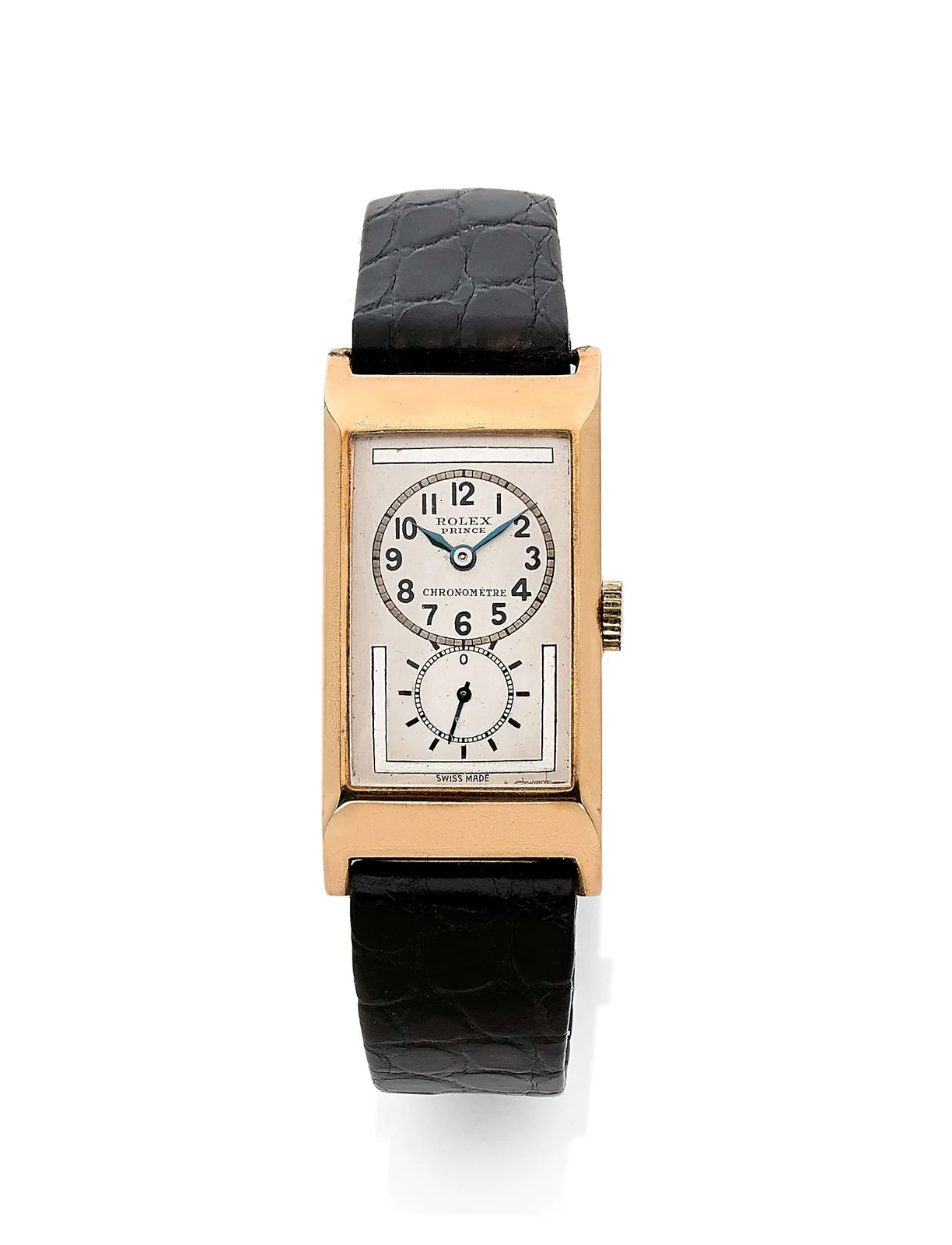 Case 39658, Artcurial, lot 141 (2018)
-
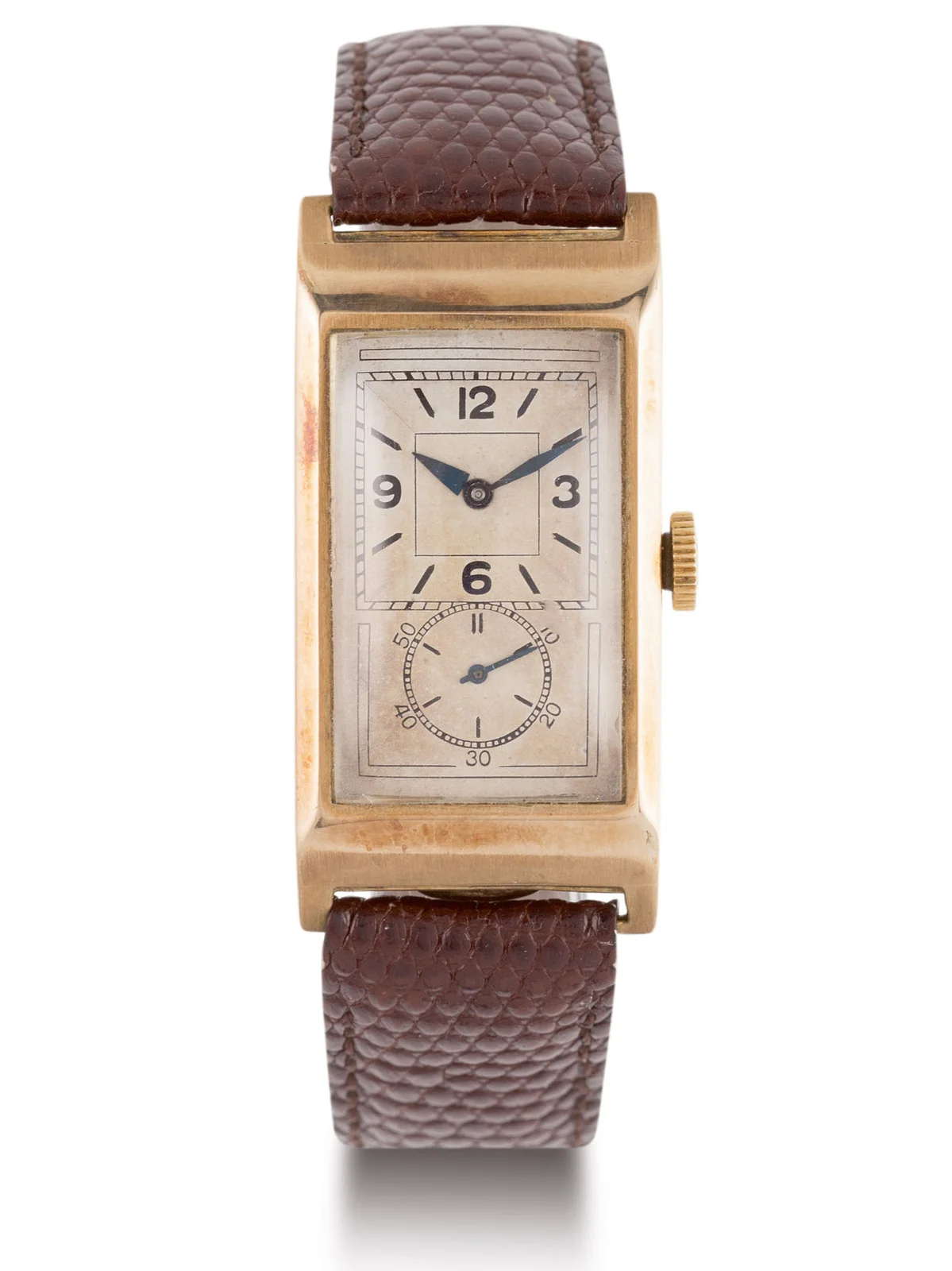 Case 74532, Antiquorum, lot 434 (2018)
-
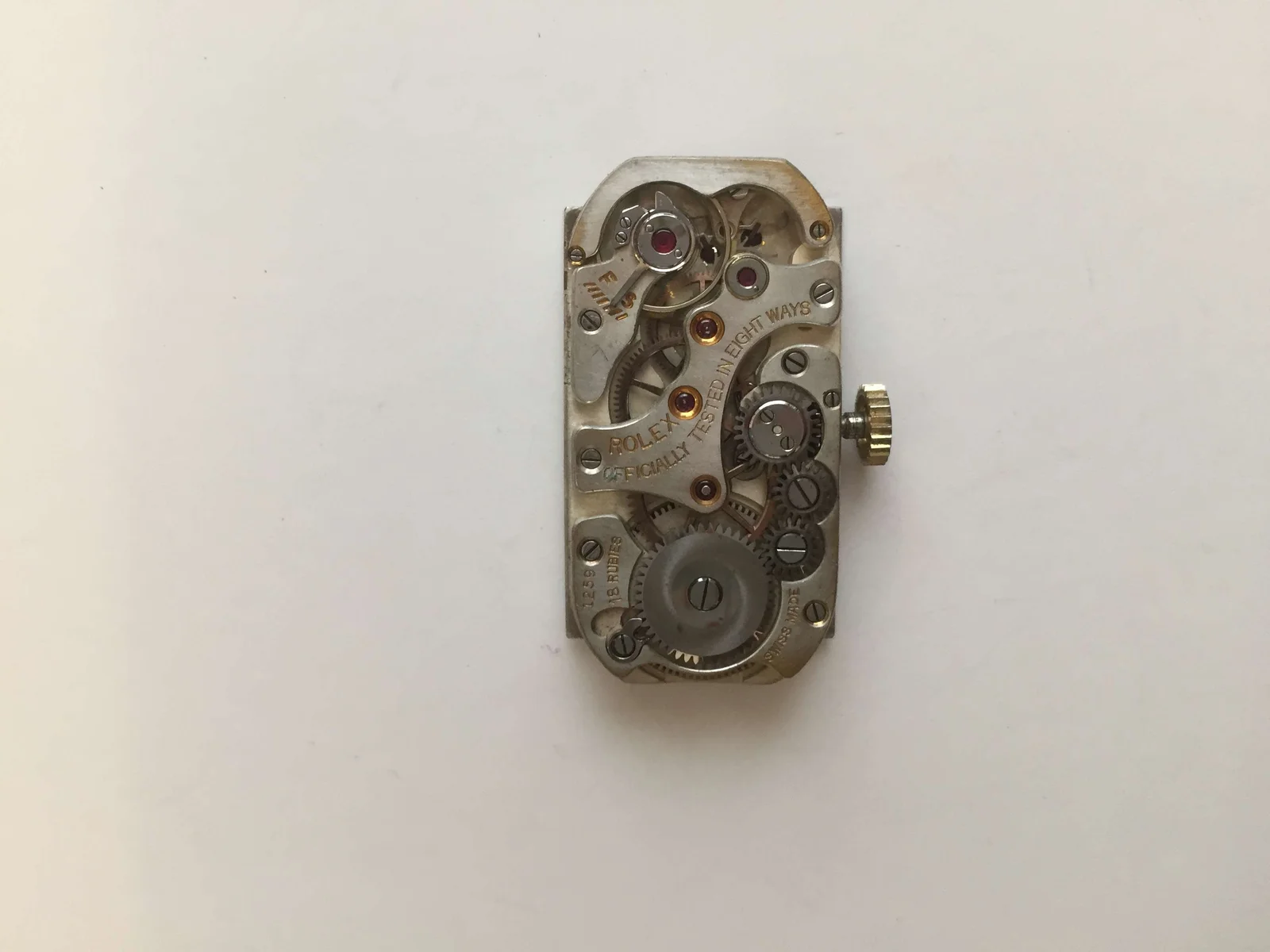 Movement in case 39658, Artcurial, lot 141 (2018)
-
Case 39658 stamped 1541, Artcurial, lot 141 (2018)
-
Case profile and fixed bars, Artcurial, lot 141 (2018)
-
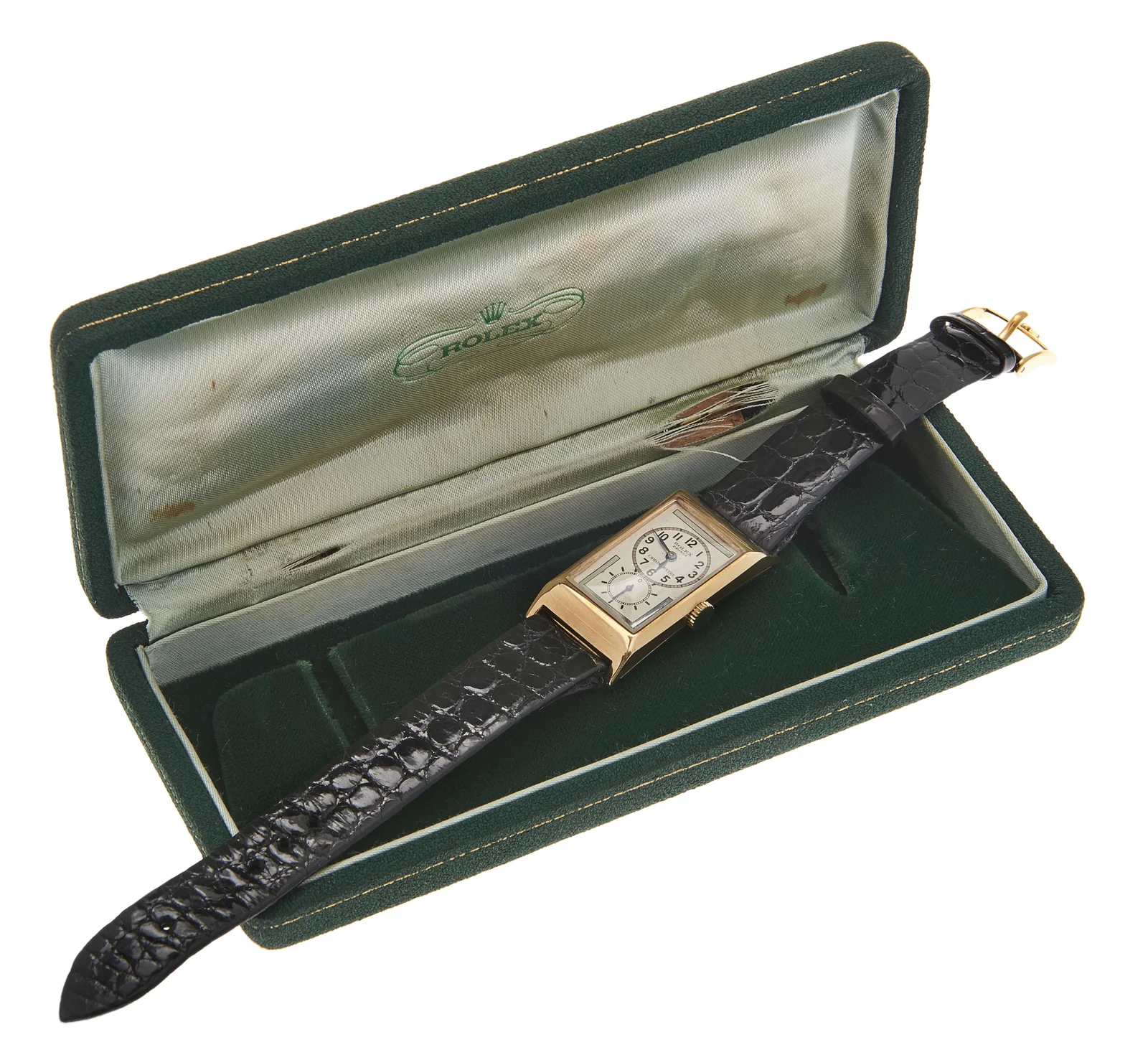 Case 39658 with presentation case, Artcurial, lot 141 (2018)
Sources
- "Christie's, Rolex Prince ref. 1541, case 7334", Christie's
- "Christie's, Rolex Prince ref. 1541, lot 555", Christie's
- "Antiquorum, Rolex Prince ref. 1541, lot 366", Antiquorum, 2004-04-24
- "Phillips Hong Kong, Rolex Prince ref. 1541, lot 821", Phillips
- "Christie's, Rolex Prince Chronomètre ref. 1541, case 39626", Christie's
- "Christie's, Rolex Prince Brancard ref. 1541, case 037742", Christie's
- "Artcurial, Rolex Prince ref. 1541, case 39658", Artcurial
- "Antiquorum, Rolex Prince Classic ref. 1541, lot 99", Antiquorum, 1994-04-10
- "Antiquorum, Rolex Prince ref. 1541, case 7080, lot 190", Antiquorum, 2010-03-20
- "Antiquorum, Rolex Prince ref. 1541, case 74532, lot 434", Antiquorum, 2018-07-17
- "Bonhams, Rolex Prince ref. 1541, lot 107", Bonhams, 2016-12-14
- "Bonhams, Rolex Prince ref. 1541, case 10183, lot 58", Bonhams, 2022-05-17
- "Bonhams, Rolex Prince Brancard ref. 1541, case 192**, lot 31", Bonhams; transcript via Collector Square, 2016-11-22
- "Monaco Legend Auctions, Rolex Prince ref. 1541, case 016134, lot 179", Monaco Legend Auctions, 2024-04-20
- "Christie's, Rolex Prince display movement, Cal. T.S. Ref. 300, 2019", Christie's, 2019-11-11
- "Olde Timers, 1930s 9ct gold rectangular Rolex Prince ref. 1541", Olde Timers
- "Chrono24 dealer listing, Rolex Prince Brancard ref. 1541", Laurenti via Chrono24
- Tim Mosso, "The Golden Age of Rolex Movements Part I", Quill & Pad, 2019-04-09
- Jack Forster, "Hands-On Cellini Rolex Prince: The Rolex Nobody Knows (But You Should)", Hodinkee, 2015-07-24
- Colin A. White, "The Vintage Rolex Field Manual, Prince reference table — ref. 1541", Morning Tundra, 2020
--- 15803 chars, 0 images ---