
Rolex Datejust 1630
Datejust 36 → 1630

The two-tone Datejust 1630 pairs a steel case with gold details and an integrated bracelet.
Core facts
| Reference | Model | Documented period | Movement | Case | Crystal | Bracelet |
|---|---|---|---|---|---|---|
| 1630 | Oyster Perpetual Datejust | Examples dated circa 1975–1978 | Automatic, Cal. 1575 in specialist sources; auction catalogues often say 1570 | 36 mm in most listings; Heritage gives 35 mm for one case; steel and gold with fluted bezel | Sapphire | 96673 in most sources; Heritage lists 95673 for one case |
Where it sits in the line
The steel 1530 shares the 1630's angular case and integrated bracelet. Rolex used a similar case on the Oysterquartz.
Production outline
Vetroplastica dates the reference to 1975–1977; auction records place individual watches between about 1975 and 1978, most often in 1977. Crott and Sotheby's later catalogued the same watch: the case and movement numbers match. The full factory production span remains uncertain.
Movement notes
Specialist sources identify the 1630's date-equipped movement as Cal. 1575; auction catalogues list Cal. 1570. Rolex's Cal. 1575 parts catalogue shows an automatic-device bridge marked 1570. The auction photographs do not show the movements, so those caliber labels remain unverified.
Dial map
Auction records describe silvered brushed and champagne dials. In a photographed example, Watch Collecting Lifestyle notes minute and half-minute marks on the flange; some service-replacement flanges lack the half-minute marks.
Case, bezel, crystal, and crown
Auction listings generally give a 36 mm case, steel body, gold fluted bezel and sapphire crystal. Heritage lists case 5,136,017 at 35 mm. Vetroplastica identifies crystal 25-295-C1 and crown 24-530, which measures 5.30 mm across.
Antiquorum catalogued one case in 18k gold; Sotheby's and Heritage describe other cases as 14k. Watch Collecting Lifestyle shows a 14K mark on a bracelet clasp. That mark identifies the bracelet, not the case.

Bracelets, end links, clasps, and packaging
The bracelet is usually identified as 96673. Watch Collecting Lifestyle's photographs show three gold center links on a 1630 bracelet, compared with two on the two-tone bracelet fitted to ref. 17013. Heritage calls the bracelet on case 5,136,017 a 95673 in two listings of the same watch. Sotheby's 2022 lot included a Rolex box.

Auction records
| Sale record | Catalogue details |
|---|---|
| Antiquorum, lot 269 (2005) | 36 mm; steel and 18k gold; sapphire; champagne dial; Cal. 1570, 26 jewels |
| Heritage, lot 71099 (2010; unsold) and lot 73065 (2012) | Same case 5,136,017; circa 1977; 35 mm; champagne dial; Cal. 1570; steel and 14k gold; band style 95673 |
| Sotheby's, lot 12 (2011) | Case 5,448,556; circa 1977; Cal. 1570, 26 jewels; silvered dial; steel-and-gold Jubilee bracelet |
| Christie's, lot 5623813 (2013) | Circa 1975; 36 mm; two-tone case; silvered brushed dial; Cal. 1570, 26 jewels |
| Crott, lot 100 (2015), and Sotheby's, lot 1016 (2022) | Same case 5,530,947 and movement D556844; circa 1978; Cal. 1570; champagne dial; Sotheby's describes 14k gold and a Rolex box. Both catalogues describe the same watch. |
| Aste Bolaffi, lot 57 (2019) | Case 5,291,604; circa 1977; movement D282080 catalogued as Cal. 1570; champagne soleil dial; bracelet 96673 |
-
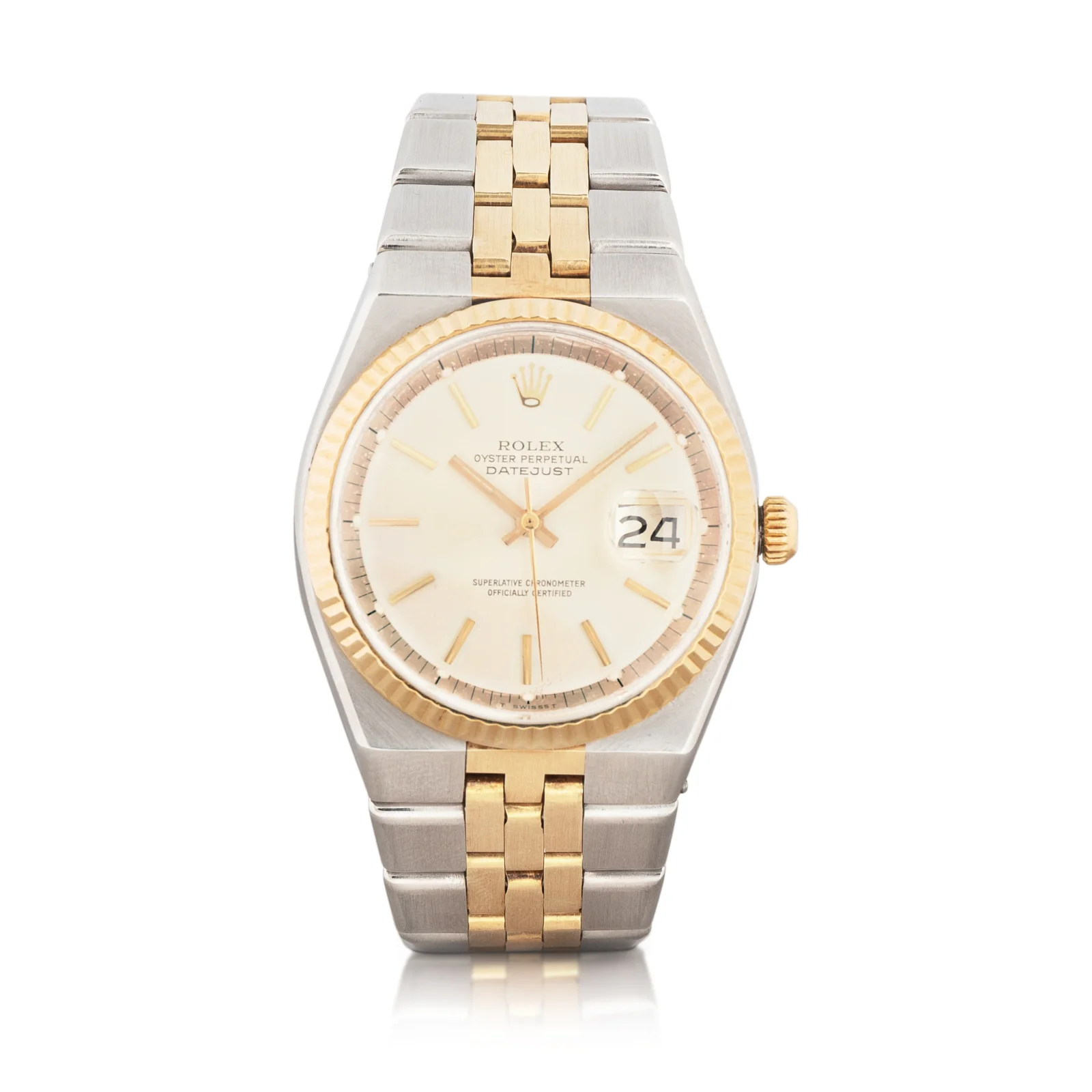 Sotheby's 2022 lot 1016, front view
-
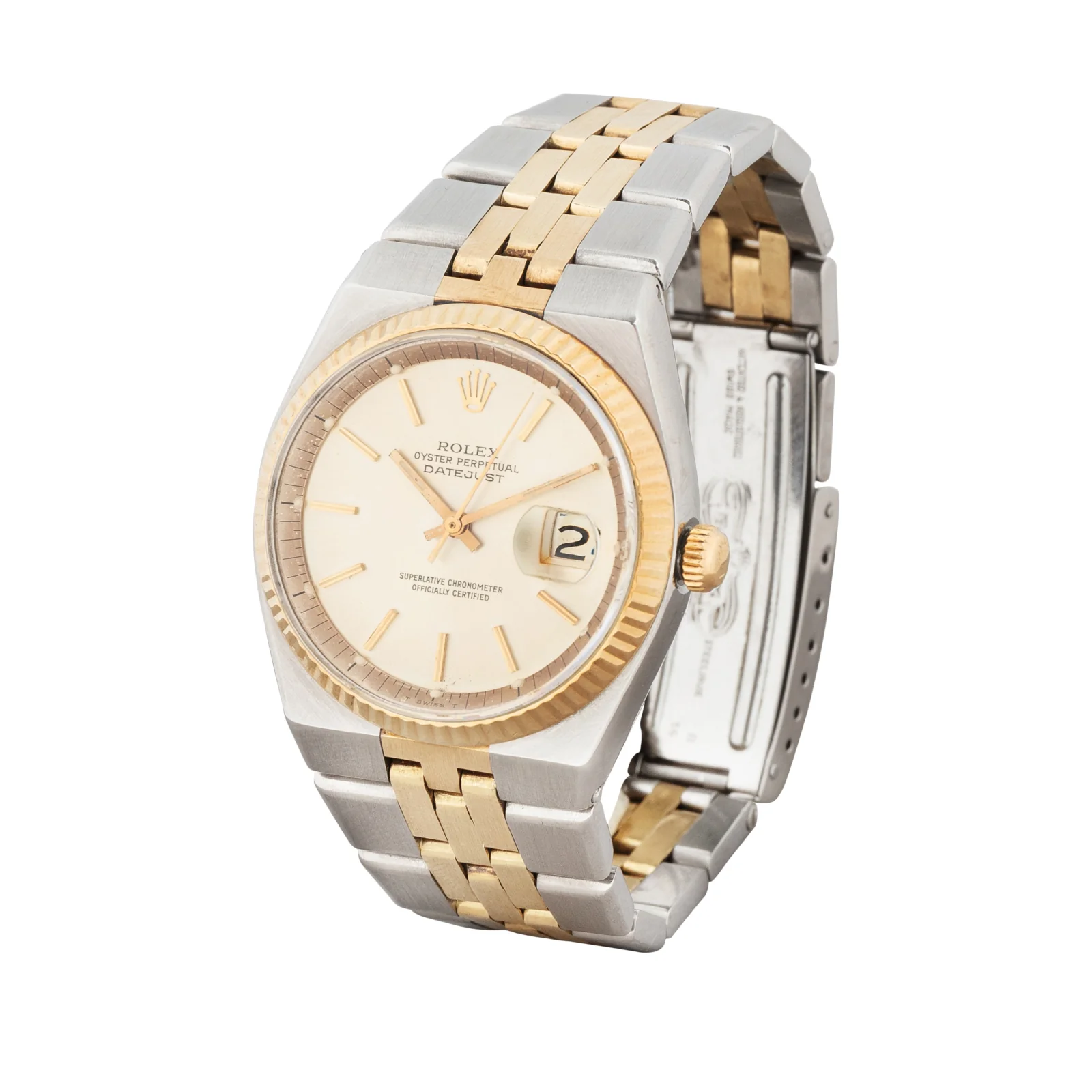 Sotheby's 2022 lot 1016, three-quarter view and open clasp
-
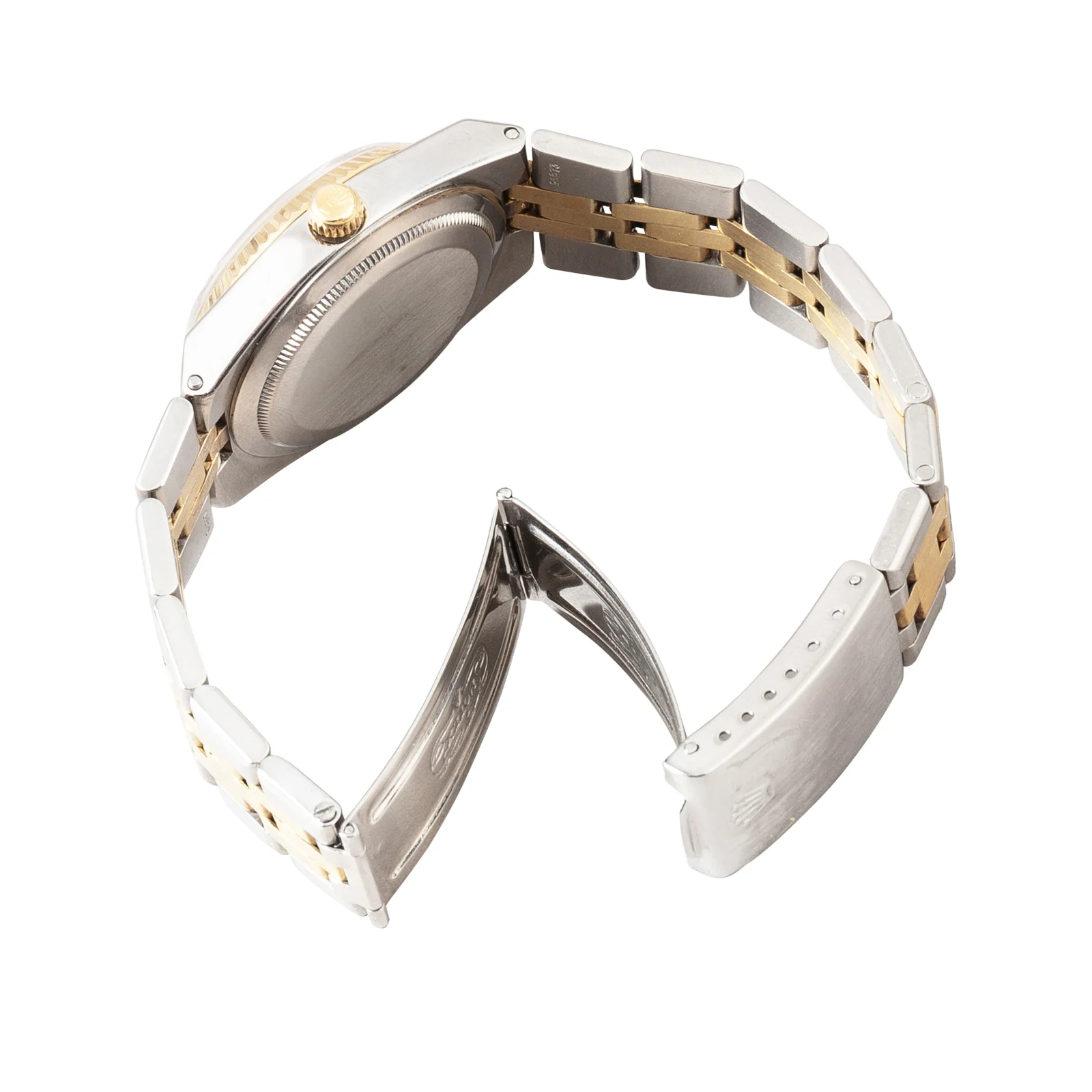 Sotheby's 2022 lot 1016, caseback and open clasp interior
Sources
- "Rolex ref. 1630, lot 71099", Heritage Auctions
- "Rolex ref. 1630, lot 73065", Heritage Auctions
- "Datejust ref. 1630, lot 1016", Sotheby's
- "Rolex ref. 1630, lot 100", Crott Auctioneers
- "Rolex Datejust ref. 1630, lot 12", Sotheby's
- "Bi-colour Perpetual Datejust ref. 1630, lot 5623813", Christie's
- "Rolex Datejust ref. 1630, lot 269", Antiquorum
- "Steel-and-gold Rolex ref. 1630, lot 57", Aste Bolaffi
- "Rolex Datejust ref. 1630", Vetroplastica
- "Rolex Datejust ref. 1630", Watch Collecting Lifestyle
- "Rolex Oysterquartz — The Crown's “Nautilina” Is Worth Your Time", Fratello
- "Anmerkungen zur automatischen Oysterquartz Ref. 1530, 1570, 1630 und 1831", R-L-X forum
- "Cal. 1575 parts catalogue", Rolex