
Rolex Oyster Perpetual Date 1530
Oyster Perpetual → 1530

Auction catalogues identify 1530 examples as steel Oyster Perpetual Dates with an angular case and integrated bracelet. They date individual examples from 1975 to circa 1977. The automatic movement distinguishes the 1530 from the later quartz Oysterquartz models with a related case design.
Core facts
| Detail | Documented information |
|---|---|
| Reference | 1530 |
| Model name | Oyster Perpetual Date; some catalogues style it “Date Just” |
| Display | Hours, minutes, central seconds and date |
| Movement | Cal. 1575 is the likely date-equipped movement; auction catalogues label examples Cal. 1570 |
| Material | Stainless steel in the reviewed exact-reference catalogues |
| Diameter | Auction records measure examples at 36 mm, 36.5 mm and approximately 37 mm |
| Dial | Silvered examples with baton markers; Sotheby’s describes one as champagne |
| Bracelet | Integrated steel bracelet; 96660 is documented, while 17000 and 17000B examples are reported with unresolved delivery status |
Where it sits in the line
The 1530 has an angular case and integrated bracelet, a layout Rolex later used on Oysterquartz models. Its automatic movement separates it from those quartz watches. Collectors often compare the steel 1530 with the two-tone Datejust 1630; the similar outline still needs separate case and bracelet evidence for each reference.
Phillips credits Gérald Genta with the design. Powerfunk disputes the attribution, citing Genta’s account of his Rolex work. The available accounts leave the designer unresolved.
Production outline
Christie’s and Monaco Legend date individual examples to 1975. Aste Bolaffi dates one to circa 1976, and Phillips dates a higher-serial example to circa 1977. Adrian Hailwood’s GQ article describes a short run beginning in 1975 and ending when the Oysterquartz appeared in 1977. A 2024 R-L-X discussion cites catalogue listings and serial examples that complicate that two-year span. The dated watches document a mid-to-late-1970s span; factory endpoints remain unknown.
Phillips, Monaco Legend, GQ and Powerfunk repeat an estimate of roughly 1,500 watches. None cites a production ledger, so the figure remains an estimate.
Movement notes
Christie’s, Monaco Legend, Sotheby’s, Antiquorum, Phillips and Aste Bolaffi catalogue examples as Cal. 1570; Phillips, Christie’s and Aste Bolaffi list 26 jewels. A detailed R-L-X technical post identifies the date-equipped 1530 movement as Cal. 1575. Rolexopedia’s movement guide explains that Cal. 1575 adds the calendar to Cal. 1570 and carries a bridge engraved “1570.” Cal. 1575 is the likeliest fitment. No auction movement in this set was inspected, so the identification remains provisional.
Dial map
The catalogues describe silvered dials with applied baton markers. Monaco Legend calls its example silvered with a two-tone sloping outer section; Sotheby’s describes a separate dial as champagne. An R-L-X post, drawing on an unattributed dealer-catalogue image, and Powerfunk both identify silver as the factory color and attribute warmer champagne or salmon tones to ageing. The catalogue descriptions leave that distinction unresolved. The Antiquorum photos show a silver-colored dial with a warm cast; the images cannot separate an original finish from later ageing.
Hailwood describes minute hashes and lume plots on the sloped rehaut. Powerfunk notes that some surviving rehauts have aged darker than the dial.

Case, bezel, crystal, and crown notes
Auction records describe a tonneau-shaped steel case, smooth bezel and screw-down back. Reported diameters range from 36 to 37 mm, with Phillips measuring its example at 36.5 mm. Monaco Legend’s structured field gives 36 mm while its essay says 34 mm; Christie’s and Sotheby’s also list 36 mm.
GQ identifies a sapphire crystal and links the deep, sloping rehaut to the thinner automatic movement inside the angular case. R-L-X reads Rolex’s 1984 service catalogue as assigning the smaller No. 530 crown to the 1530 and 1630. That reading still needs confirmation against a parts drawing. The Antiquorum photos show the angular case and smooth bezel.
-
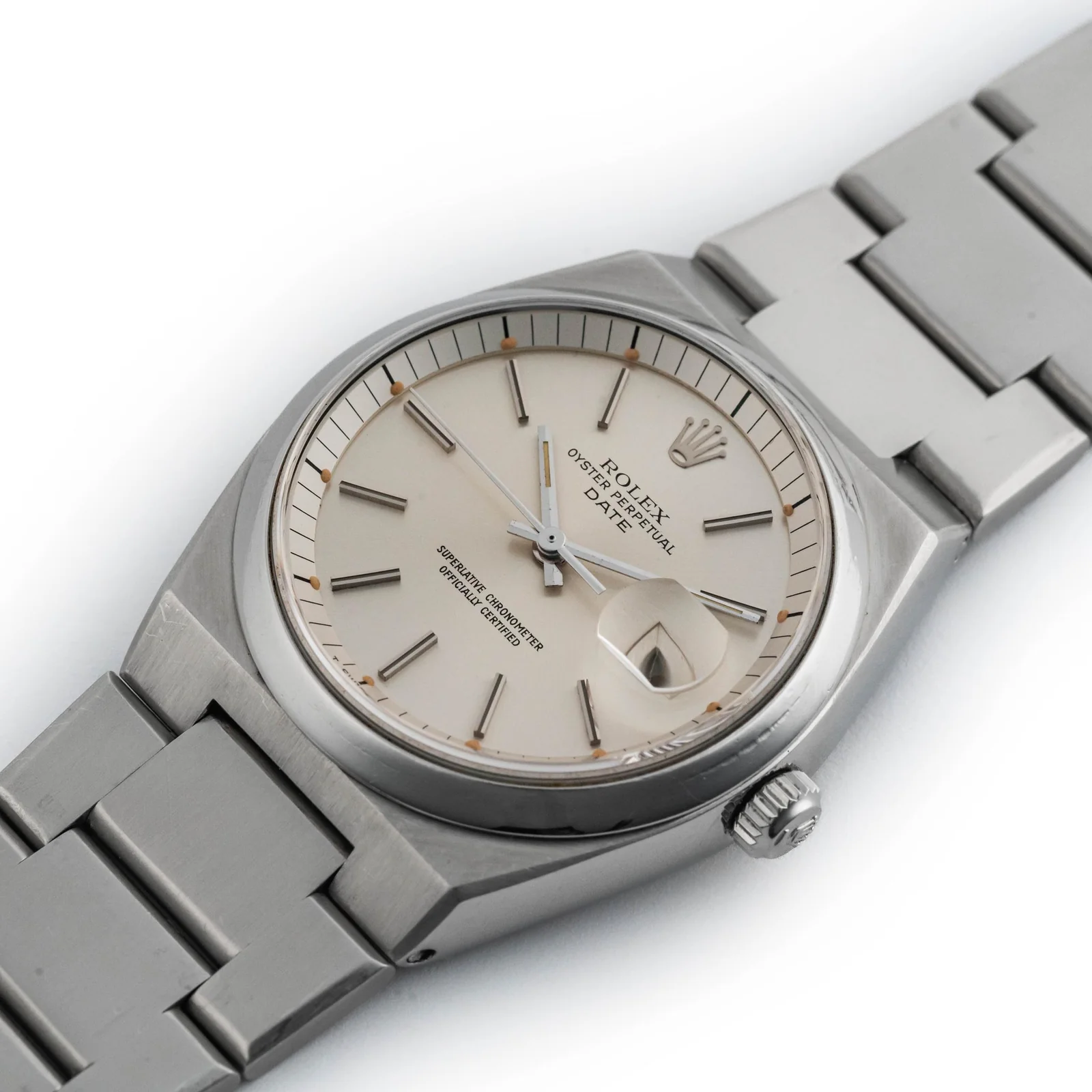 Case profile and integrated bracelet, Antiquorum lot 139, 2024
-
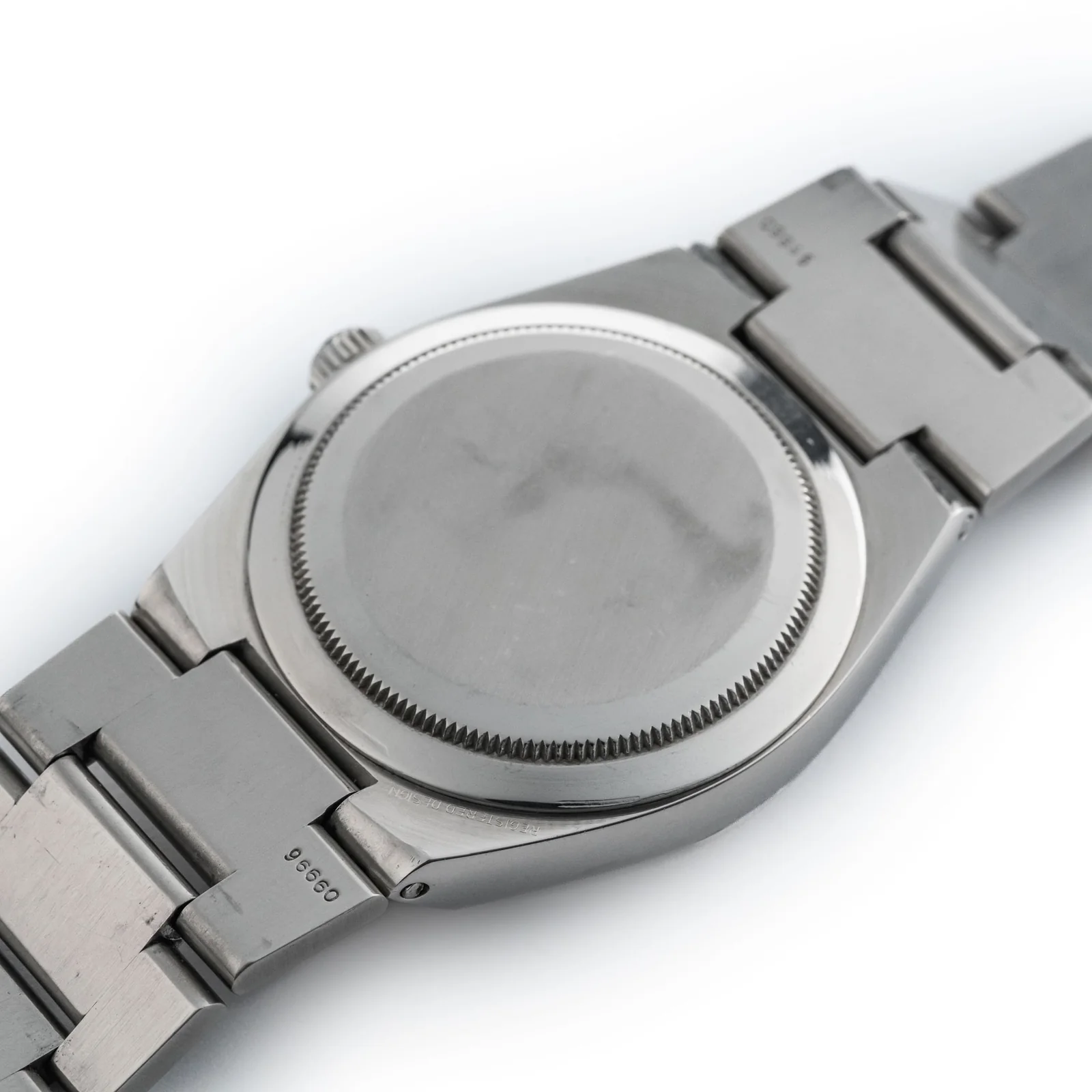 Caseback and bracelet-end stamp, same watch


Bracelets, end links, clasps, and packaging notes
GQ, Powerfunk and the R-L-X comparison associate bracelet 96660 with the 1530; Antiquorum’s photos show that stamp on one example. Collector discussions also show 17000 and 17000B bracelets on watches presented as 1530s. Some owners describe them as replacements; others point to near-new examples and suggest Rolex may have fitted them late in the run. The available records leave original delivery unresolved. Bracelet and clasp marks identify those components, not the watch head.
Phillips records a guarantee, hang tag and presentation box with its circa-1977 example. The sources reviewed do not establish a standard package for the reference.
Special branches
The reviewed catalogues describe steel examples. The factory’s full material range and any special orders remain undocumented in this source set.
Historical market and auction record
| Source | Example | Catalogue details |
|---|---|---|
| Christie’s | Case 4'058'182, circa 1975 | Cal. 1570, 26 jewels, silvered brushed dial, 36 mm |
| Monaco Legend | Case 4'169'795, 1975 | Cal. 1570, silvered two-tone sloping dial, 36 mm |
| Sotheby’s | Case 4'147'761, circa 1975 | Cal. 1570, champagne dial, 36 mm; box and papers |
| Antiquorum | Case 4'092'655, circa 1975 | Cal. 1570, silver-colour dial, approximately 37 mm |
| Aste Bolaffi | Case 4'138'898, circa 1976 | Cal. 1570, movement D148547, 26 jewels, 36 mm; bracelet 96660 |
| Phillips | Case 5'171'021, circa 1977 | Cal. 1570, 26 jewels, 36.5 mm; guarantee, tag and box |
The listed dates and specifications belong to those individual lots.
-
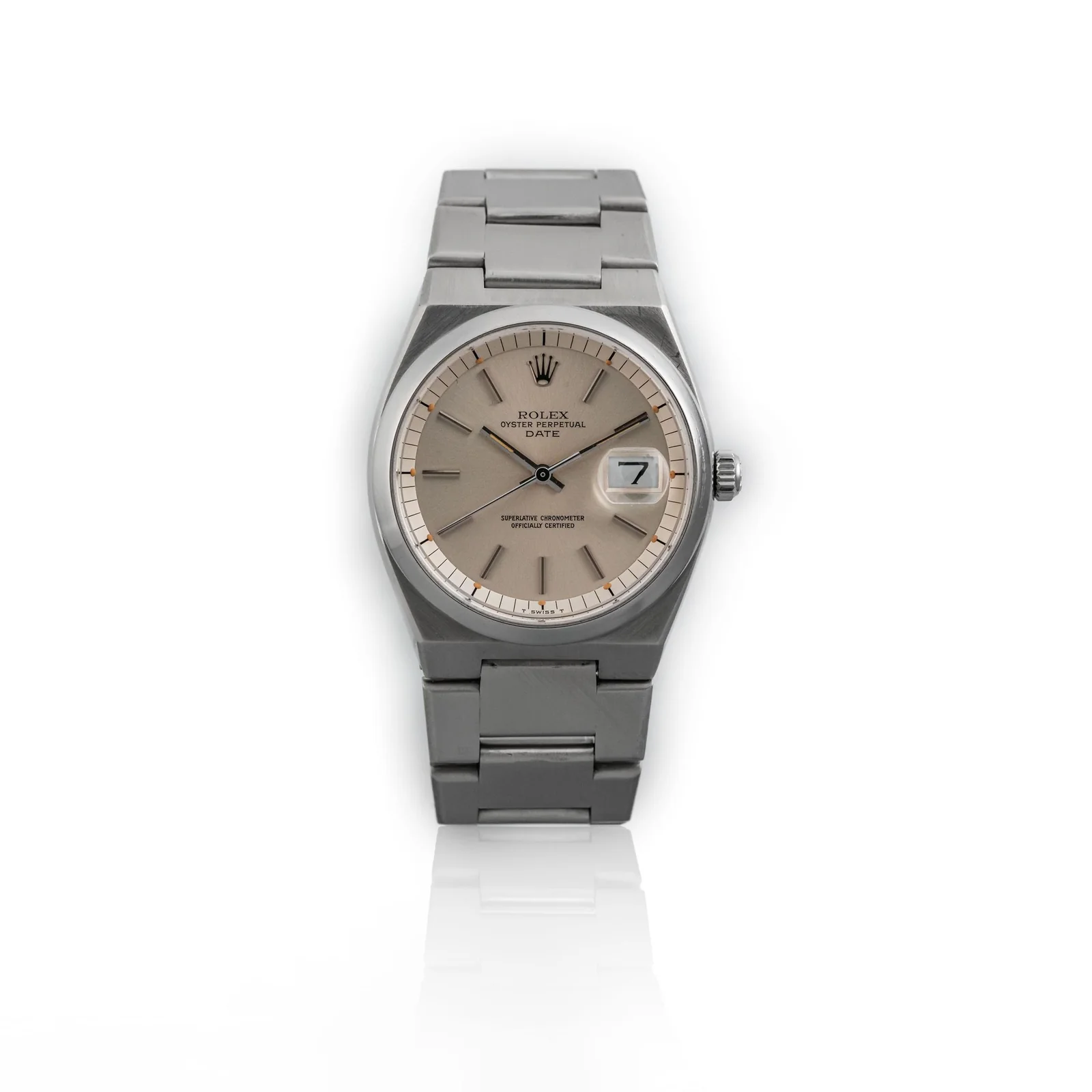 Antiquorum, lot 139, 2024
-
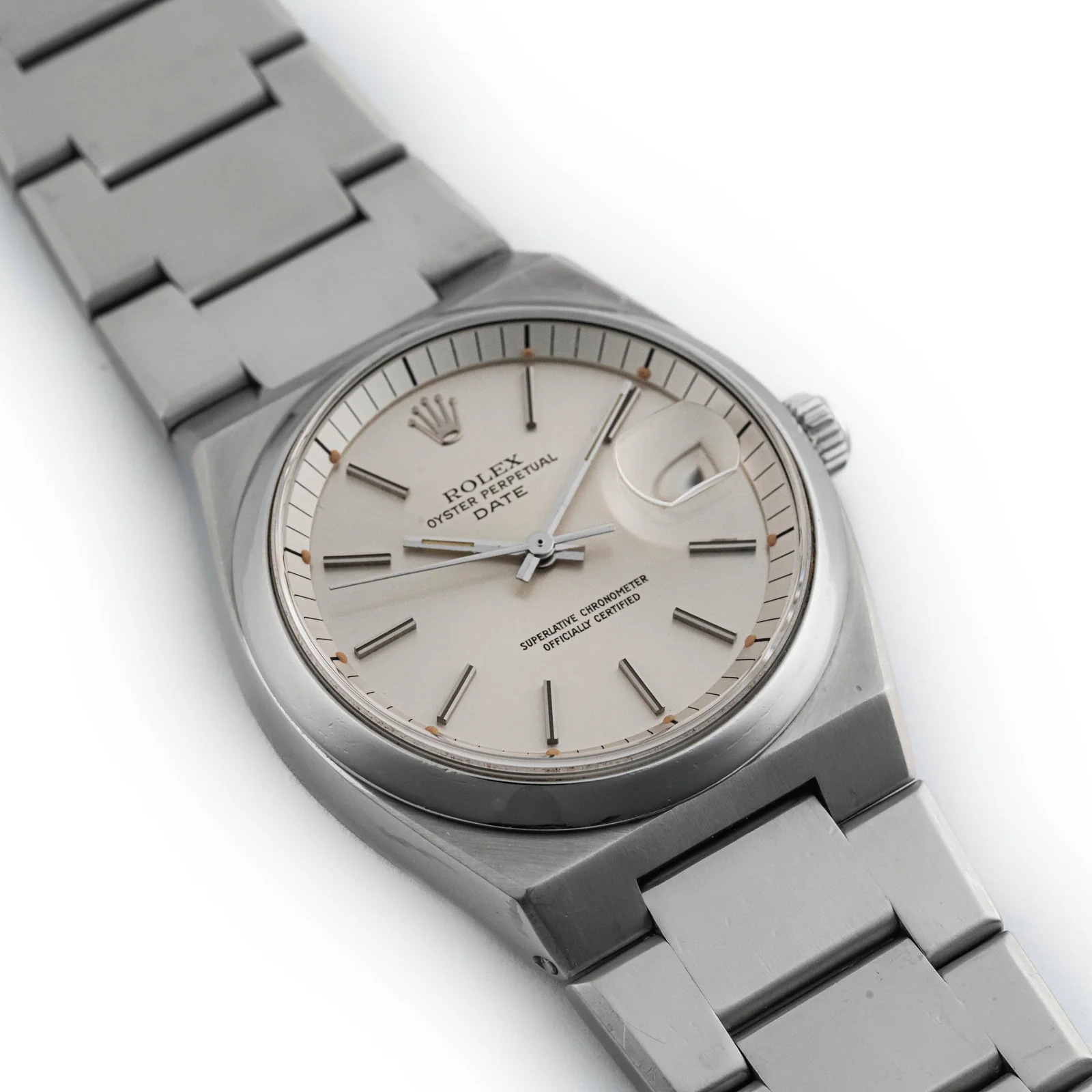 Dial and sloping rehaut, same lot
-
Case profile and integrated bracelet, same lot
-
Caseback and 96660 bracelet stamp, same lot
Sources
- "Geneva Watch Auction XIV, Rolex Oyster Perpetual Date ref. 1530, case 5'171'021", Phillips
- "Lot 63, Rolex Oyster Perpetual Date ref. 1530, case 4'147'761", Sotheby's
- "Rolex Oyster Perpetual Date ref. 1530, case 4'058'182", Christie's
- "Geneva October 2024, lot 139, Rolex ref. 1530, case 4'092'655", Antiquorum
- "Exclusive Timepieces & Jewels, lot 12, Rolex Date ref. 1530, case 4'169'795", Monaco Legend Auctions
- "Lot 137, Rolex Date ref. 1530, case 4'138'898", Aste Bolaffi
- Adrian Hailwood, "This 1970s Rolex is a horological in-joke that watch collectors can't resist", British GQ
- "Anmerkungen zur automatischen Oysterquartz Ref. 1530, 1570, 1630 und 1831", R-L-X forum
- "Ref. 1530 bracelet question", Vintage Rolex Forum
- Powerfunk, "Rolex 1530 Guide", Luxury Bazaar
- "Cal. 1575 parts catalogue", Rolex